What is Seborrheic Dermatitis? Causes, Symptoms and Treatment
SkinChange.AI
Medical editorial team
Seborrheic dermatitis is one of the most common skin conditions, affecting up to 5% of the population. It typically presents as persistent dandruff and red, scaly patches on the face and scalp — and while it poses no serious threat to your overall health, it can be bothersome and affect self-confidence.
In this article, we explain exactly what seborrheic dermatitis is, what causes it, what it looks like, and what you can do about it.
What is seborrheic dermatitis?
Seborrheic dermatitis is a chronic, inflammatory skin condition that primarily affects areas with many oil glands — the scalp, face, ears, chest and upper back. It results in red, scaly and greasy patches that can be mildly itchy.
Although the exact cause is unknown, the condition is thought to be linked to overproduction of sebum (skin oil), hormonal factors and the yeast Malassezia, which naturally lives on the skin. The disease is not contagious and poses no serious health risk.
What does seborrheic dermatitis look like?
Seborrheic dermatitis typically presents as follows:
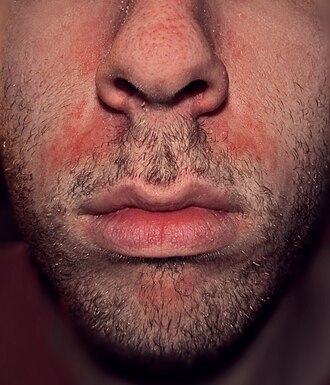
- Scaly, red patches: Often on the scalp (dandruff), eyebrows, sides of the nose or behind the ears. The scales can be white and dry or yellowish and greasy.
- Greasy or yellowish scales: Particularly noticeable in infants, where the condition is called cradle cap. The yellow scales stick to the oily scalp.
- Mild itching or burning: Itching and irritation in the affected areas is common but rarely severe.
In adults, the condition most often presents as persistent dandruff and red, scaly areas along the hairline, on the forehead, around the nose and in the eyebrows.
Why does seborrheic dermatitis happen?
Several factors are believed to contribute to the development of seborrheic dermatitis:
Malassezia yeast
The yeast Malassezia lives naturally on the skin, particularly in oily areas. In some people it triggers an immune reaction that causes inflammation and the characteristic scaling. Research has shown that the number of Malassezia is elevated on affected skin in people with seborrheic dermatitis.
Increased oil production
Oil glands produce more oil under the influence of hormones, certain medications and medical conditions. Excess sebum creates an environment where Malassezia thrives and multiplies. This explains why the condition primarily affects oily areas.
Genetics and immune system
Some people are genetically more prone to developing seborrheic dermatitis. There is also a strong association with neurological conditions such as Parkinson's disease, and people with HIV/AIDS have a significantly higher prevalence. Stress can also worsen symptoms.
Who gets seborrheic dermatitis?
Seborrheic dermatitis affects people of all ages:
- Infants: Cradle cap is very common in infants under three months and usually resolves on its own within the first year.
- Adults 30–50 years: This age group is most commonly affected. The condition is more prevalent in men than women.
- People with weakened immune systems: People with HIV/AIDS, organ transplants or other immune deficiencies have a significantly higher prevalence and often more severe symptoms.
What can you do about seborrheic dermatitis?
Seborrheic dermatitis is manageable, but there is no cure. Consistent treatment controls symptoms and prevents flare-ups:
🧴 Medicated shampoo (dandruff)
Shampoos with antifungal agents (ketoconazole, ciclopirox, selenium sulfide) or zinc pyrithione are first-line treatment for dandruff and scalp seborrhoea. Use 2–3 times per week.
💊 Antifungal creams
For facial and body inflammation, antifungal creams (ketoconazole, clotrimazole) and calcineurin inhibitors (tacrolimus, pimecrolimus) are effective, steroid-free alternatives.
🩺 Topical corticosteroids
For more widespread inflammation, short courses of mild to moderate topical corticosteroids (hydrocortisone 1%) can relieve symptoms. Avoid prolonged use on the face.
🥗 Lifestyle
Regular and gentle skincare, stress management and avoiding products with alcohol or fragrance can all help reduce flare-ups.
Medical classification: Seborrheic dermatitis is classified as EA81 in the WHO's International Classification of Diseases (ICD-11). The condition is characterised by scaly, erythematous plaques particularly on sebum-rich areas and is managed with antifungal shampoos and topical steroids.
Frequently asked questions
Is seborrheic dermatitis contagious?
No, seborrheic dermatitis is not contagious. Even though the yeast Malassezia is present on the skin, it is your own immune reaction that determines whether you develop the condition.
What is the difference between dandruff and seborrheic dermatitis?
Dandruff is a mild form of seborrheic dermatitis where the scalp is dry or oily with loose white flakes, but without visible redness. Seborrheic dermatitis, on the other hand, also includes inflammation, redness and more firmly attached scales.
When should I contact a dermatologist?
Contact a dermatologist if over-the-counter shampoos and creams are not helping after 4–6 weeks, if the rash is very widespread or bothersome, or if the skin becomes infected (oozing, yellow crusts, fever).
Get a diagnosis within 48 hours
Not sure about your rash? Upload photos via the SKIND app and receive a personal assessment from a certified dermatologist — no waiting list.
Disclaimer: This article is for informational purposes only and does not replace professional medical advice. Always consult a dermatologist for personal guidance.